
Datto RMM + DeskDay is live now! If you're a Datto RMM user, sign up today to claim your free trial Get Started

 Team DeskDay Team DeskDay
In a world where 89% of consumers expect to receive immediate responses to inquiries, MSPs are at a crossroads. The rapid rise of digital tools and customer communication preferences means customer service isn’t just about answering tickets anymore. The real challenge lies in offering seamless support that spans across various channels, and MSPs can no longer afford to ignore this shift.
Failure to implement a multi-channel strategy is more than just an oversight; it’s a missed opportunity to meet client expectations, streamline support operations, and differentiate in an increasingly competitive market. In fact, a recent study found that companies with strong multi-channel strategies retain 89% of their customers, while those without experience much higher churn rates.
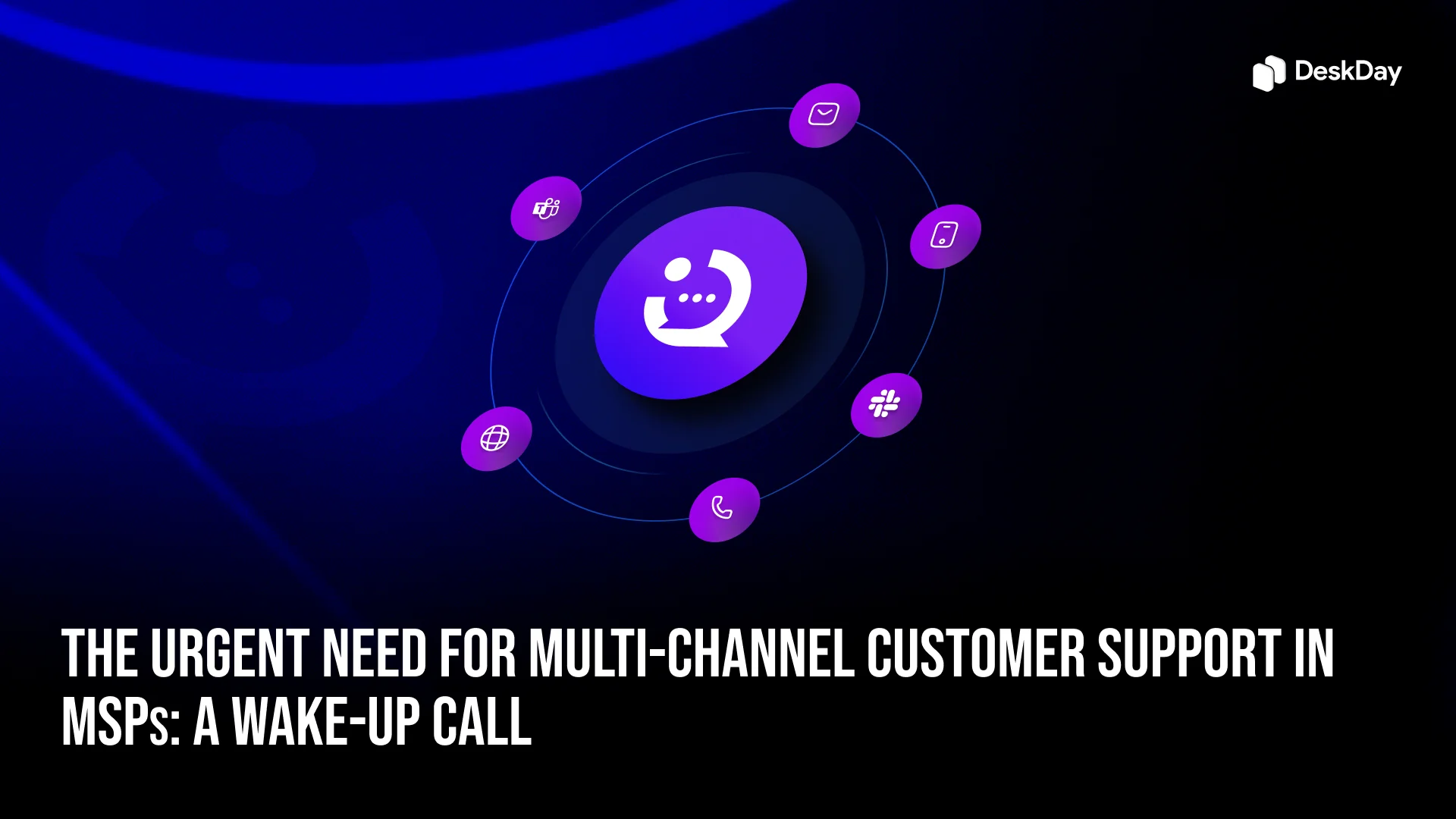
Multi-channel support for MSPs is the ability to provide customer service across various communication platforms such as email, chat, Teams, SMS, social media, and help desks. While each platform serves a specific purpose and operates in its own silo, the real power lies in unifying these channels into an integrated support system, ensuring a cohesive and frictionless experience for both end-users and techs.
While MSPs often use multiple channels for service delivery, the true value emerges when all these channels work together to create a consistent, efficient, and customer-centric support journey. The key challenge for MSPs is integrating these channels, ensuring that customer interactions, regardless of their entry point, are captured and responded to in a seamless way.

The MSP industry is no stranger to the evolving demands of customer service. End-users expect more than just basic troubleshooting; they want fast, accurate, and personalized service across multiple touchpoints. Here’s why MSPs need to opt for a thoughtful multi-channel support strategy:
In today’s world, customers expect a support experience that adapts to their needs and preferences. Over 80% of customers expect to engage with businesses across multiple channels. Whether it’s via phone, email, live chat, or social media, end-users want flexibility. A multi-channel support strategy allows MSPs to meet these expectations while also giving them the tools to resolve issues quickly and efficiently, regardless of the communication medium.
When MSPs implement a multi-channel approach that integrates these channels, end-users enjoy a continuous service experience. For example, if a customer initiates a ticket chat on the Teams app, they should be able to continue the conversation over the end-user portal or mobile app if necessary, without losing context or repeating their issue.
By enabling channels to share information, MSPs can provide a smoother, more efficient experience.
Managing support across multiple channels isn’t without its challenges. However, when these channels are properly integrated, techs can quickly access an end-user’s history and track ticket status, regardless of the channel. This integration significantly reduces response times and improves the speed of issue resolution.
A well-implemented multi-channel strategy ensures that end-users receive personalized responses across every channel. For instance, if an end-user begins a conversation on chat but needs a more in-depth discussion, they can escalate to phone support without having to explain their issue again. This seamless transition not only saves time but also improves customer satisfaction and loyalty.
Each channel serves a different purpose and comes with its own strengths. MSPs must thoughtfully select and integrate the right channels based on client needs, service complexity, and operational efficiency:
Email remains one of the most common channels for handling non-urgent issues. It allows end-users to provide detailed descriptions of problems with attachments like logs or screenshots. Email is also asynchronous communication, ensuring that MSPs and end-users can respond at their convenience.
Live chat offers real-time interactions, making it perfect for addressing quick technical queries or troubleshooting issues. It provides immediate support without the need for phone calls or long email chains, making it ideal for end-users who need fast assistance. Many end-users prefer this channel for its convenience and speed.
With the rise of mobile device usage, offering support through mobile apps or text-based solutions becomes a critical component of a multi-channel strategy. Mobile support allows end-users to engage and resolve issues while on the go, enhancing flexibility and accessibility.
With many businesses relying on collaboration platforms like Microsoft Teams or Slack, MSPs can engage with end-users or internal teams directly through these channels. These platforms allow for integrated ticketing systems and facilitate fast communication in a more collaborative environment. MSPs can use bots or automated workflows to manage incidents and provide support in real-time.
SMS is an excellent choice for brief alerts, reminders, or status updates. It’s particularly useful for urgent notifications, such as ticket updates, service disruptions, or scheduled maintenance. SMS is widely accessible, and end-users appreciate its directness and convenience.
A well-designed help desk or end-user portal is crucial for centralizing end-user requests and ticket management. End-users can submit tickets, track progress, and access self-service options through these platforms. Portals allow end-users to find solutions in the knowledge base and submit tickets without needing to contact support directly, which can reduce workload and response times for MSPs.
Although phone support offers a personal touch, it is less commonly used in modern MSP environments due to the rise of faster, more efficient communication channels. That said, phone support can still be invaluable for complex troubleshooting and high-touch situations where a human connection is essential. However, it often requires greater resources and may be slower compared to other support methods.
Incorporating these channels into a multi-channel support strategy allows MSPs to meet their end-users where they are, offering flexibility and convenience while also improving overall service delivery.

The key to a successful multi-channel strategy isn’t just about offering various channels; it’s about integrating them into a cohesive experience. MSPs must create a unified backend in the PSA where all communication is tracked and techs have access to the full context of each interaction, regardless of whether it originated from email, chat, or Teams.
At DeskDay, we make multi-channel support effortless and efficient with IT-Connect, a comprehensive, multi-channel ticketing experience for end-users. Available across Microsoft Teams, mobile, desktop, web portals, Slack(coming soon), and email, IT-Connect allows MSPs to seamlessly engage with end-users on their preferred channels. Since it’s built directly into DeskDay’s PSA platform, the experience is unified and seamless, ensuring that all user interactions are tracked and managed in one central system.
This integration eliminates the silos commonly seen with disparate support channels, allowing techs to access the full context of each request regardless of where it originated. Whether a user reaches out via Teams, mobile, or web portal, DeskDay’s IT-Connect ensures that techs can respond efficiently, resolve issues faster, and maintain a consistent, personalized service experience, making multi-channel support not just possible, but truly cohesive.
To succeed with multi-channel support, MSPs must follow these core principles:
For MSPs, the importance of multi-channel support cannot be overstated. As customer expectations evolve, offering a consistent, responsive, and personalized experience across all channels is not just a competitive advantage; it’s an essential component of client retention and satisfaction.
By carefully selecting, integrating, and optimizing the right channels, MSPs can create a smooth and efficient service experience that delights customers and streamlines operations.
Adopting a multi-channel support strategy is no longer optional for MSPs. The time to act is now; end-users are already expecting it. The choice of channels and how they are integrated will define your success in the future. Explore how DeskDay’s multi-channel strategy can help you excel your customer expectations by booking a personalized demo.
Multi-channel support allows MSPs to interact with customers across various platforms such as email, chat, Microsoft Teams, and phone, ensuring faster issue resolution and better client satisfaction.
It helps MSPs reduce response times, centralize communication, and improve service delivery, giving end-users a seamless experience without switching tools.
DeskDay integrates chat, email, and Teams-based ticketing into a single PSA platform, allowing techs to manage all customer interactions from one place efficiently.
Yes. By providing consistent, responsive support across channels, MSPs can build stronger relationships, increase trust, and retain clients longer.
Absolutely. DeskDay’s multi-channel support scales from small teams to large MSP operations, enabling efficient ticketing, automation, and customer communication for any business size.

Get exclusive content on the MSP industry and become a part of the DeskDay community.


