 Team DeskDay Team DeskDay
As MSPs scale, complexity compounds. More endpoints. More clients. Higher security expectations. Tighter SLAs. The margin for operational inefficiency shrinks fast.
Tool sprawl is usually the silent culprit. When monitoring, documentation, ticketing, and billing operate in isolation, the result is predictable: data silos, slower resolutions, revenue leakage, and technicians spending more time navigating systems than solving problems.
A well-architected stack eliminates that friction.
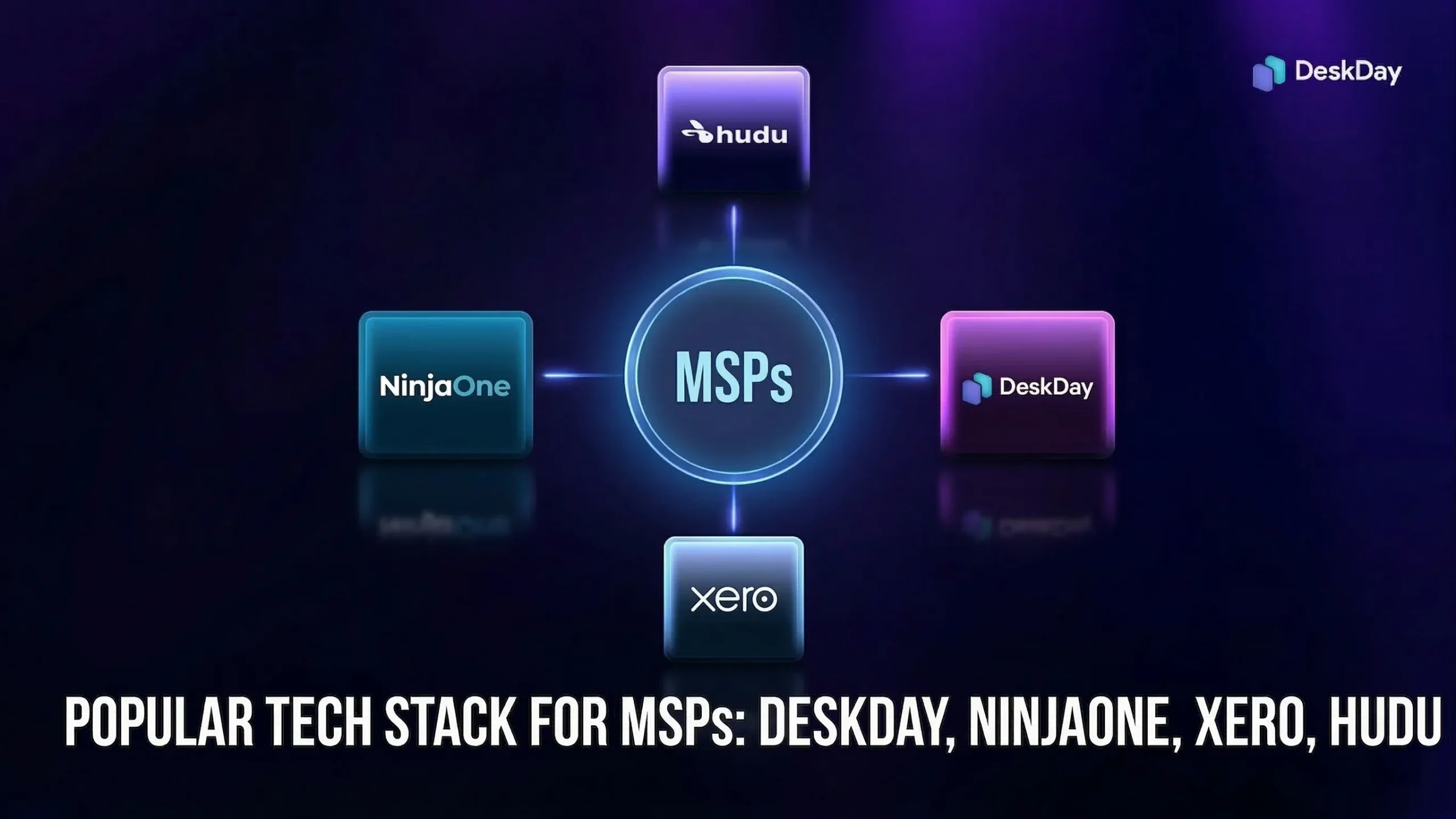
The combination of DeskDay, NinjaOne, Hudu, and Xero represents a deliberate operating model, not just a collection of tools. DeskDay functions as the operational core. NinjaOne secures and monitors endpoints. Hudu institutionalizes knowledge. Xero enforces financial clarity. Together, they create a tightly integrated service architecture designed for scale, control, and margin protection.
DeskDay reframes PSA around how support actually happens today: conversational, high-velocity, and multi-channel.
Rather than forcing end-users into rigid portals, it embeds support directly into their daily workflows such as Microsoft Teams, email, mobile, and web environments. This reduces friction at the point of request while preserving structured backend workflows for technicians.
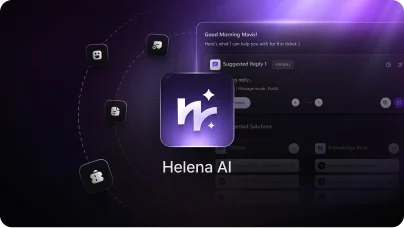
At the center is Helena AI , which augments rather than replaces technician expertise. It drafts contextual responses, and surfaces relevant documentation and historical resolutions inside the ticket interface along with live sentiment analysis of customers. The goal is simple: reduce administrative overhead and preserve cognitive bandwidth for diagnostics and problem-solving.
For growth-stage MSPs, DeskDay extends beyond ticketing:
NinjaOne provides the operational discipline required to maintain endpoint integrity across distributed environments.
Its agent-based monitoring continuously evaluates device health, patch compliance, software posture, and security indicators across Windows, macOS, servers, and hybrid infrastructure. Policy-driven automation reduces manual intervention, while granular alerting minimizes noise and prioritizes actionable risk signals such as ransomware behavior patterns or performance degradation.
For technicians, execution speed matters. NinjaOne delivers:
The result is leverage. Lean teams can manage thousands of assets without compromising security posture or SLA performance.
Documentation is often the most undervalued asset inside an MSP. When unmanaged, it becomes tribal knowledge. When structured correctly, it becomes operational capital.
Hudu transforms documentation into a structured, asset-centric repository. Password vaulting, SOP templates, client-branded portals, and version-controlled records ensure knowledge persists beyond individual technicians.
Its natural-language search and API flexibility allow documentation to move from static storage to active workflow integration. Instead of switching systems, technicians retrieve network diagrams, credentials, vendor contacts, and compliance artifacts directly within operational contexts.
This reduces onboarding time, improves first-touch resolution rates, and mitigates risk during team turnover.
Recurring revenue models demand financial clarity.
Xero provides MSPs with modern accounting infrastructure built for subscription and services-based billing. Automated reconciliation, real-time cash flow forecasting, and multi-entity reporting create visibility across growing portfolios.
More importantly, Xero’s API architecture allows operational data to convert seamlessly into financial records. Service logs become invoice line items. Contract terms become structured revenue entries. Tax compliance and reporting remain synchronized across jurisdictions.
Clean books are not just about compliance. They are foundational for capital planning, valuation, and acquisition readiness.
DeskDay acts as the unified command center, piping bidirectional data flows that keep technicians glued to one interface for alerts, tickets, docs, and billing, eradicating tool-switching that wastes 25-40% of tech time.
Monitoring events in NinjaOne generate enriched tickets inside DeskDay, complete with endpoint metadata, and user context. Techs can launch remote sessions directly from the ticket interface, preserving context and eliminating system switching.
Once remediation is completed, validation checks confirm system health, and tickets auto close in DeskDay with documented evidence for audit and compliance purposes.
Operationally, this reduces mean time to resolution while maintaining accountability.
When tickets are created, relevant documentation from Hudu surfaces inside DeskDay contextually.
Techs can update documentation inline, ensuring improvements feed back into the central repository. Over time, the knowledge base compounds in value, strengthening resolution velocity and consistency.
Documentation evolves from passive archive to active operational fuel.
When resolution begins, timers can be activated within DeskDay. Billable hours accumulate against contracts or rate structures.
Approved entries sync into Xero as structured invoices. Payments and reconciliations flow back into operational dashboards, updating profitability metrics in near real time.
This closed-loop visibility prevents underbilling, shortens collection cycles, and provides leadership with accurate margin insights.
This stack is not about automation for its own sake. It is about operational maturity.
Reduced context switching increases technician productivity.
Structured monitoring reduces reactive firefighting.
Institutional documentation lowers operational risk.
Tight financial integration protects revenue integrity.
When aligned correctly, the DeskDay–NinjaOne–Hudu–Xero stack transforms support operations from reactive cost centers into scalable, margin-protecting service engines.
For MSPs competing in an environment defined by cybersecurity pressure, client scrutiny, and talent constraints, disciplined system architecture is no longer optional. It is a strategic differentiator.

Get exclusive content on the MSP industry and become a part of the DeskDay community.